
The Fatigue Code of Practice: What You Need to Know
Fatigue management has changed. What was once guidance is now a formal Code of Practice under Work Health and Safety (WHS) laws.
This means businesses must take a structured and proactive approach to managing the risk of fatigue at work.
If fatigue is a risk in your workplace — whether due to shift work, long hours or demanding conditions — you are expected to identify, assess and control that risk.

Your Responsibilities Under Fatigue Management Laws
Under the fatigue code of practice, organisations must:
These requirements apply across industries, including transport, mining, construction, healthcare and more.
Failure to effectively manage fatigue can lead to serious safety incidents, legal exposure and reputational risk.
The Challenges
Fatigue is one of the hardest workplace risks to control.
Traditional fatigue management methods are unreliable and difficult to defend from a compliance perspective.
The Solution
The efficient and effective way to manage fatigue is FatigueTech.
FatigueTech turns compliance into a simple, manageable process.
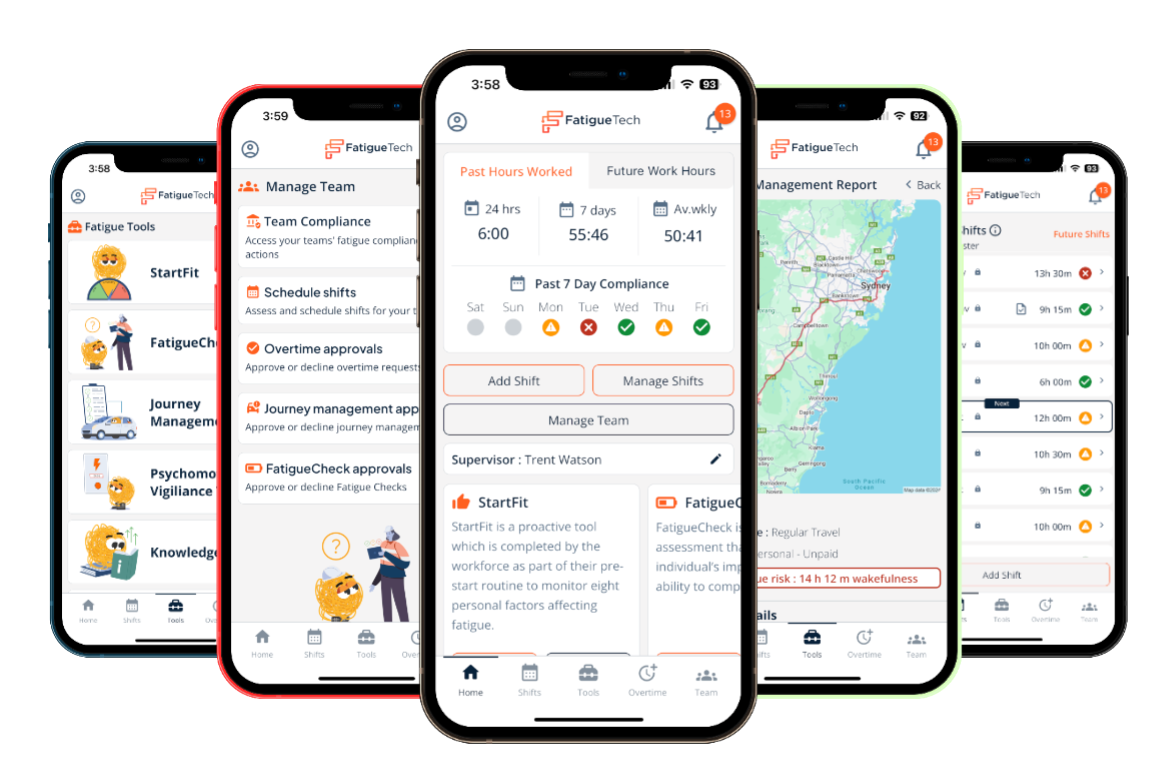
Supporting Fatigue Management
FatigueTech works with organisations to implement practical fatigue management solutions. We support you with: